“Dem Angriffskrieg trotzen – Engagierter Deutsch-Ukrainischer Akademischer Austausch / Протистояння загарбницькій війні – активний німецько-український академічний обмін”
19.03.2026
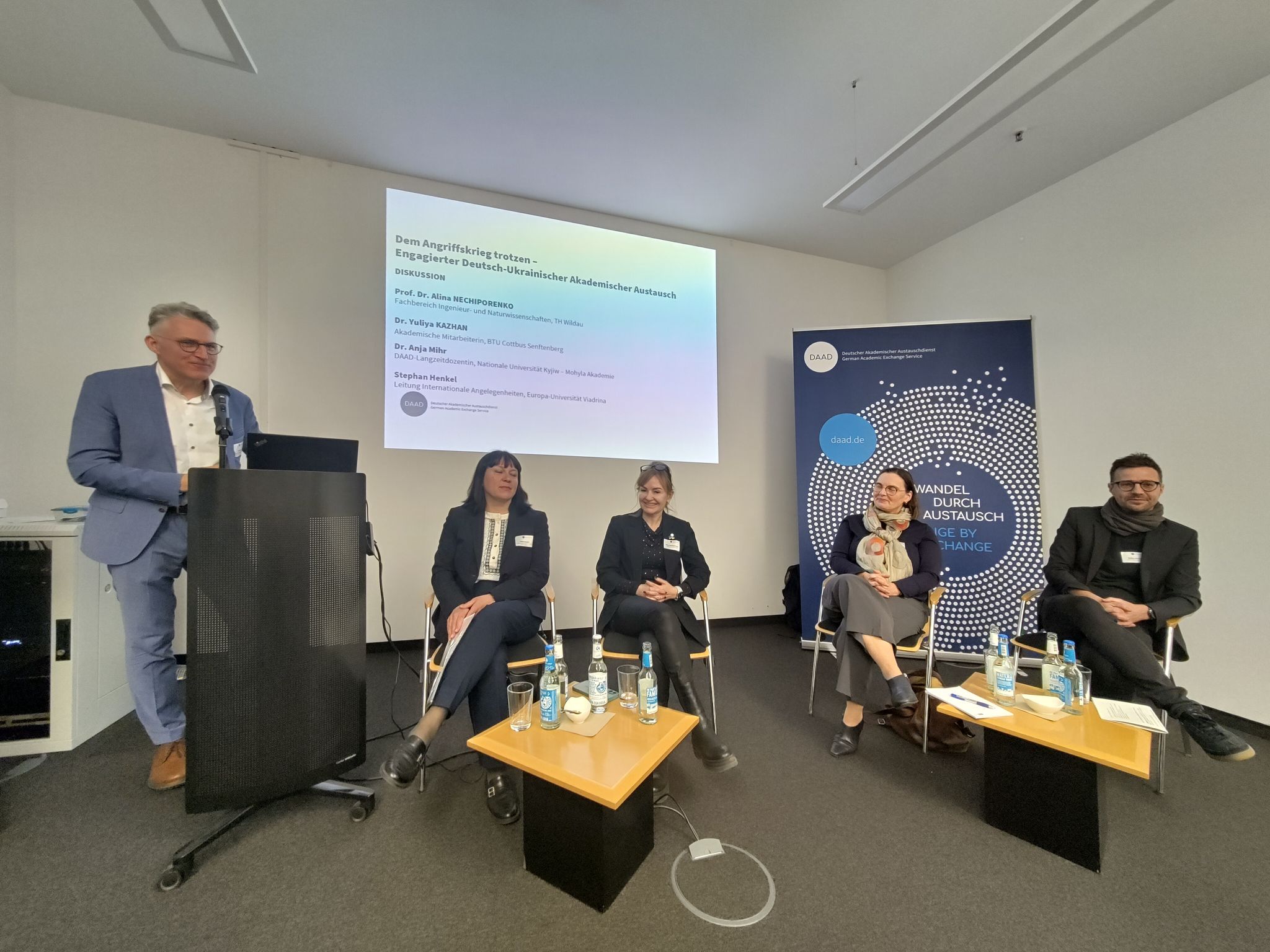
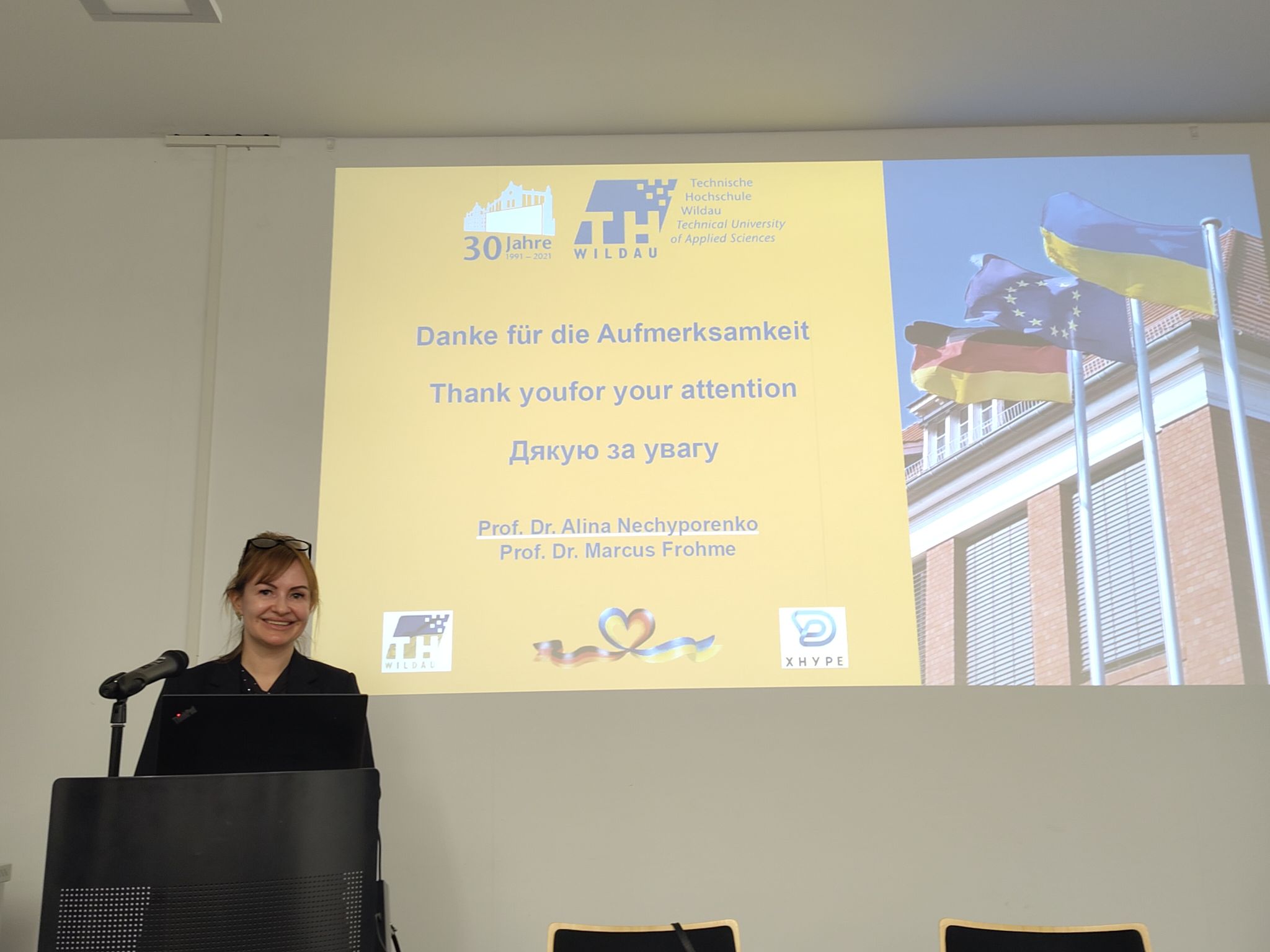
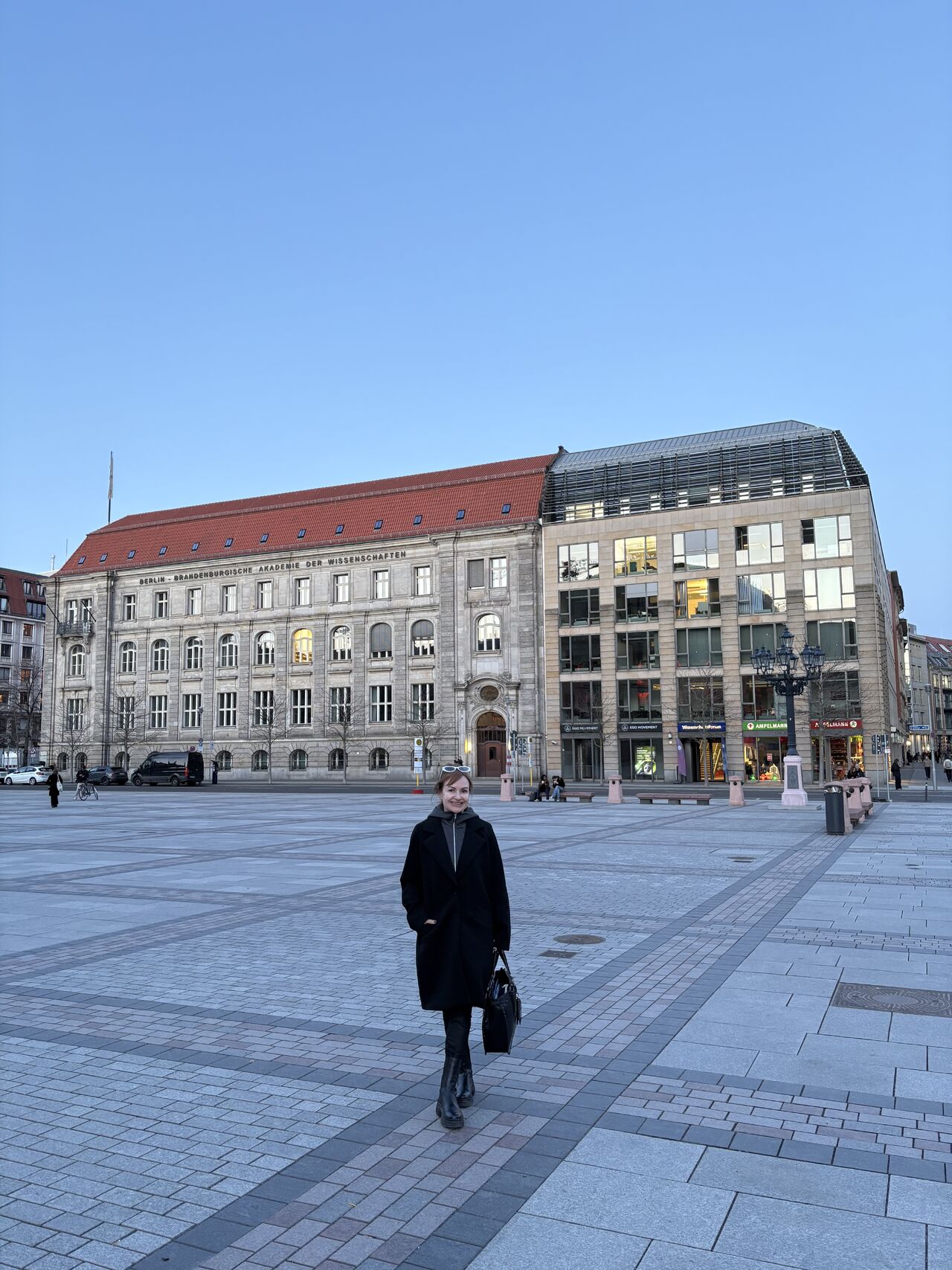
Prof. Nechyporenko participated as an invited speaker at the inspiring event “Dem Angriffskrieg trotzen – Engagierter Deutsch-Ukrainischer Akademischer Austausch / Протистояння загарбницькій війні – активний німецько-український академічний обмін”, held at the Berlin-Brandenburg Academy of Sciences and Humanities.
In my talk, I presented several German–Ukrainian collaborative projects that demonstrate how technology, research, and education can make a real difference in challenging times:
CoSMoS-NT – fostering innovation and international cooperation, including the development of the first joint study program “Applied Computer Science” between NURE and TH Wildau
BIKO-UA – a significant BMBF-funded project focused on image recognition for the identification of victims from unmarked mass graves in Ukraine
Wildau–Kharkiv IT Bridge (2022–2025) – supporting Ukrainian students and lecturers through digital education and international academic collaboration
We are grateful to organizers for the opportunity to share our work and exchange ideas with such a dedicated and inspiring community. These collaborations highlight the power of science, technology, and international partnerships in addressing global challenges.
We are looking forward to continuing and expanding these impactful initiatives.



Strategic management meeting during the NURE delegation’s visit
03.03.2026
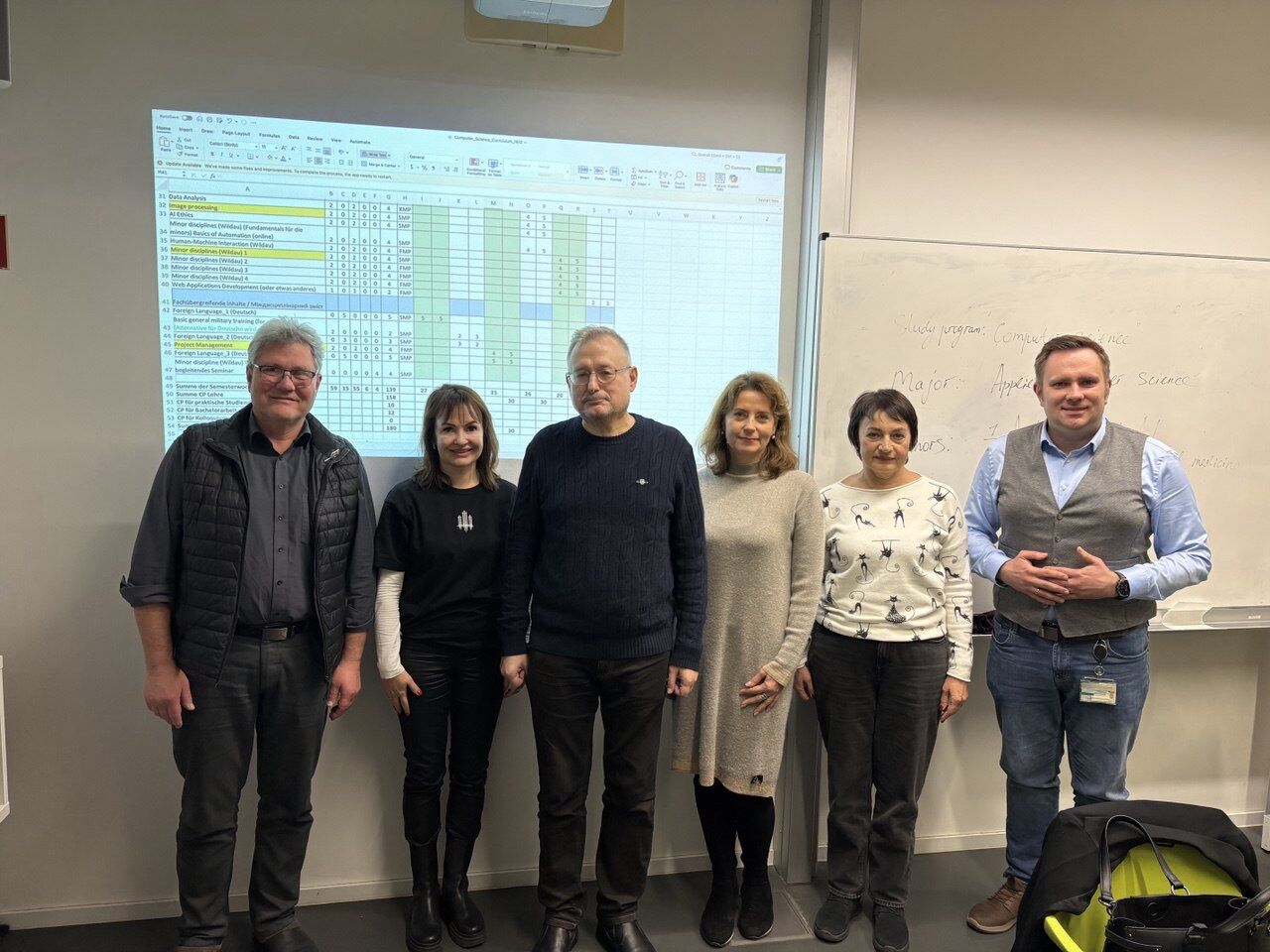
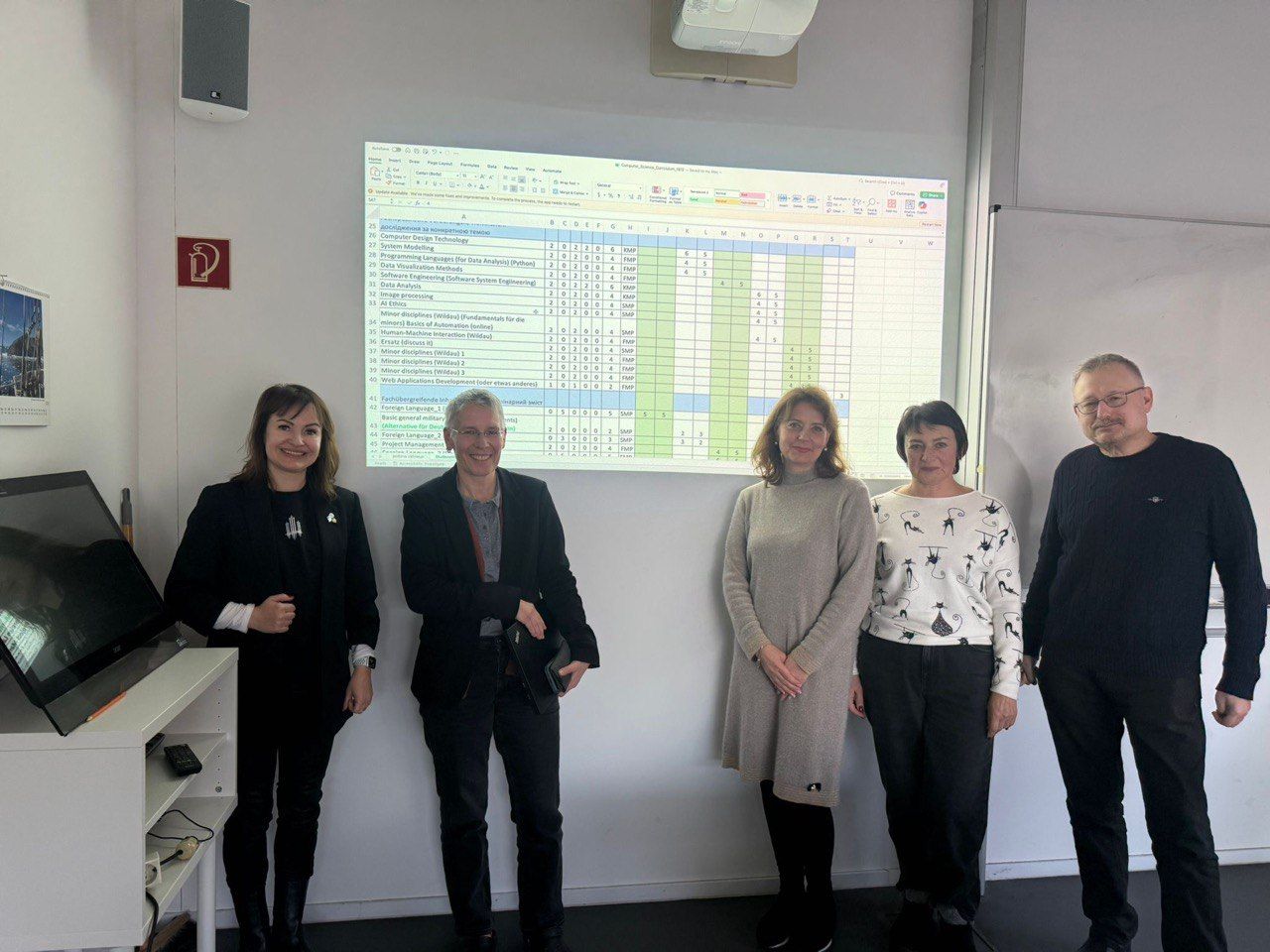
During the NURE delegation’s visit, a strategic management meeting was held under the leadership of Academic Project Manager Prof. Alina Nechyporenko. The central point was the launch of the new joint degree program “Applied Computer Science”, scheduled to start in the 2026/27 academic year.
We extend our sincere appreciation to the NURE Academic Council, chaired by Prof. Igor Ruban, for its strong support of this initiative, especially during these challenging times.
The CoSMoS project https://www.cosmos-nt.de/ represents a pioneering step in establishing a joint degree program between TU Wildau and NURE. For the first time, German and Ukrainian students will study together at a Ukrainian university, marking an important milestone in international academic cooperation and partnership.

First six months of our work
01.01.2026
As the Academic Head of the CoSMoS-NT project, I would like to reflect on the first six months of our work. Thank you to our core team Prof. Maryna Kudriavtseva, Prof. Nadiia Kalyta, Prof. Polina Sytnikova, Assoc. Prof. Oleg Zolotukhin. We are now steadily harmonizing academic requirements and shaping a strong and future-oriented study program. In December, CoSmoS-NT-NURE team participated in a series of highly productive meetings dedicated to finalizing the curriculum of the new joint study program “Applied Computer Science” These discussions marked an important milestone in the development of the program. I would like to sincerely thank: Prof. Dr. Alexander Köthe, Dean of the Faculty of Engineering and Natural Sciences, Prof. Dr. Rainer Stollhoff, Vice President for Studies and Teaching, Prof. Dr. Heike Pospisil, Prof. Dr. Jörg Jörg Reiff-Stephan, Mrs. Karin Schmidt, Head of the International Office, Prof. Dr. Marcus Frohme, Head of senate/Head of CoSMoS-NT project, coordinator Dr. Sergii Grebinyk at TH Wildau.
I am also very grateful to the state experts from the Ministry of Education and Science of Ukraine: Mrs. Oleksandra Laktionova and Mrs. Svitlana Didusenko as well as Dr. Carolin F. Roeder, from Ministry for Science, Research and Culture Brandenburg.
Special appreciation goes to our NURE team, led by Prof. Igor Grebennik and First Vice Rector Prof. Andriy Yerokhin, whose commitment and professionalism are key to the project’s success!
Wishing our partners and colleagues a successful, inspiring, and victorious New Year. May it bring new opportunities and shared achievements!



Participation in the ConnectED initiative networking event
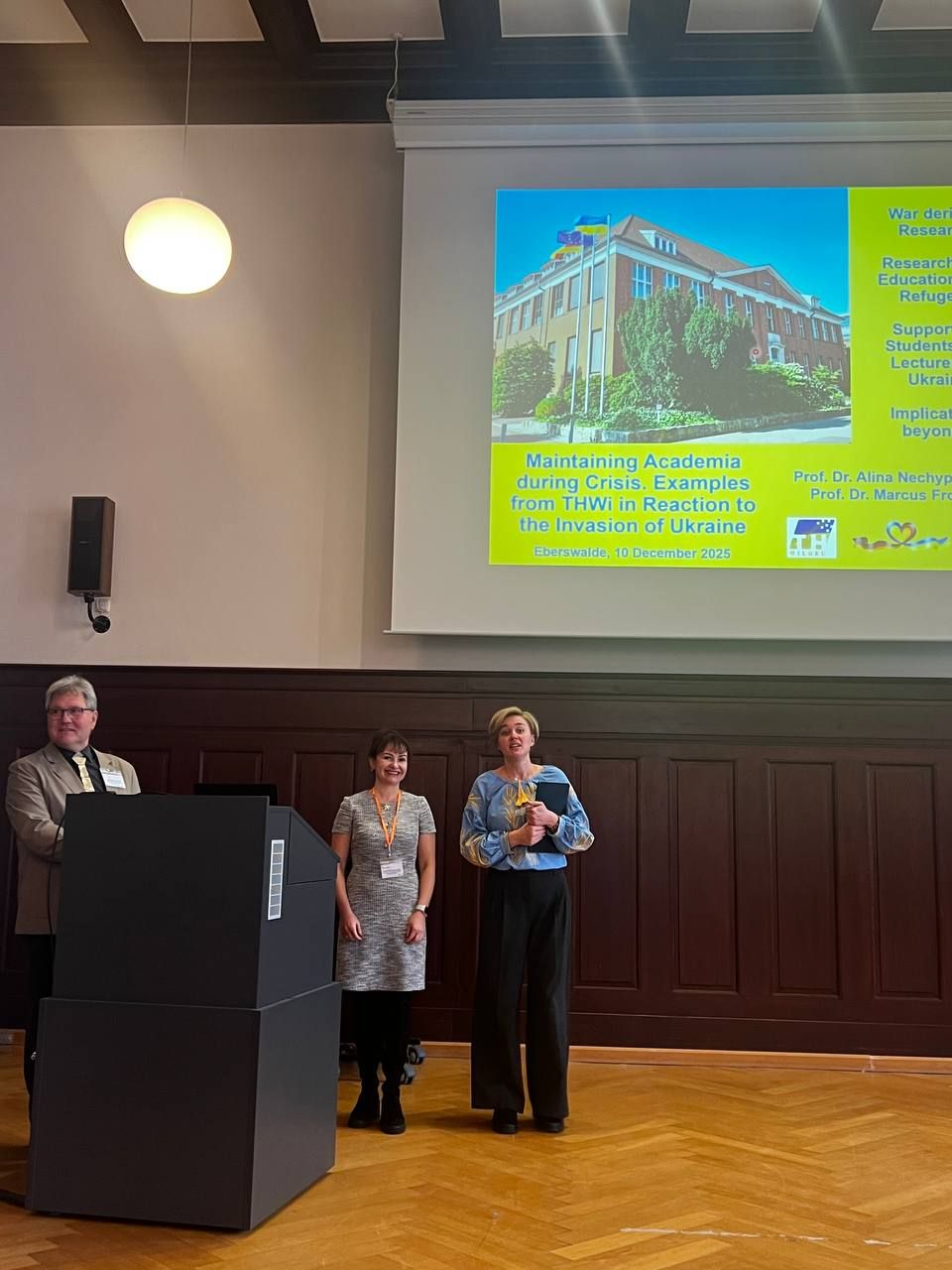
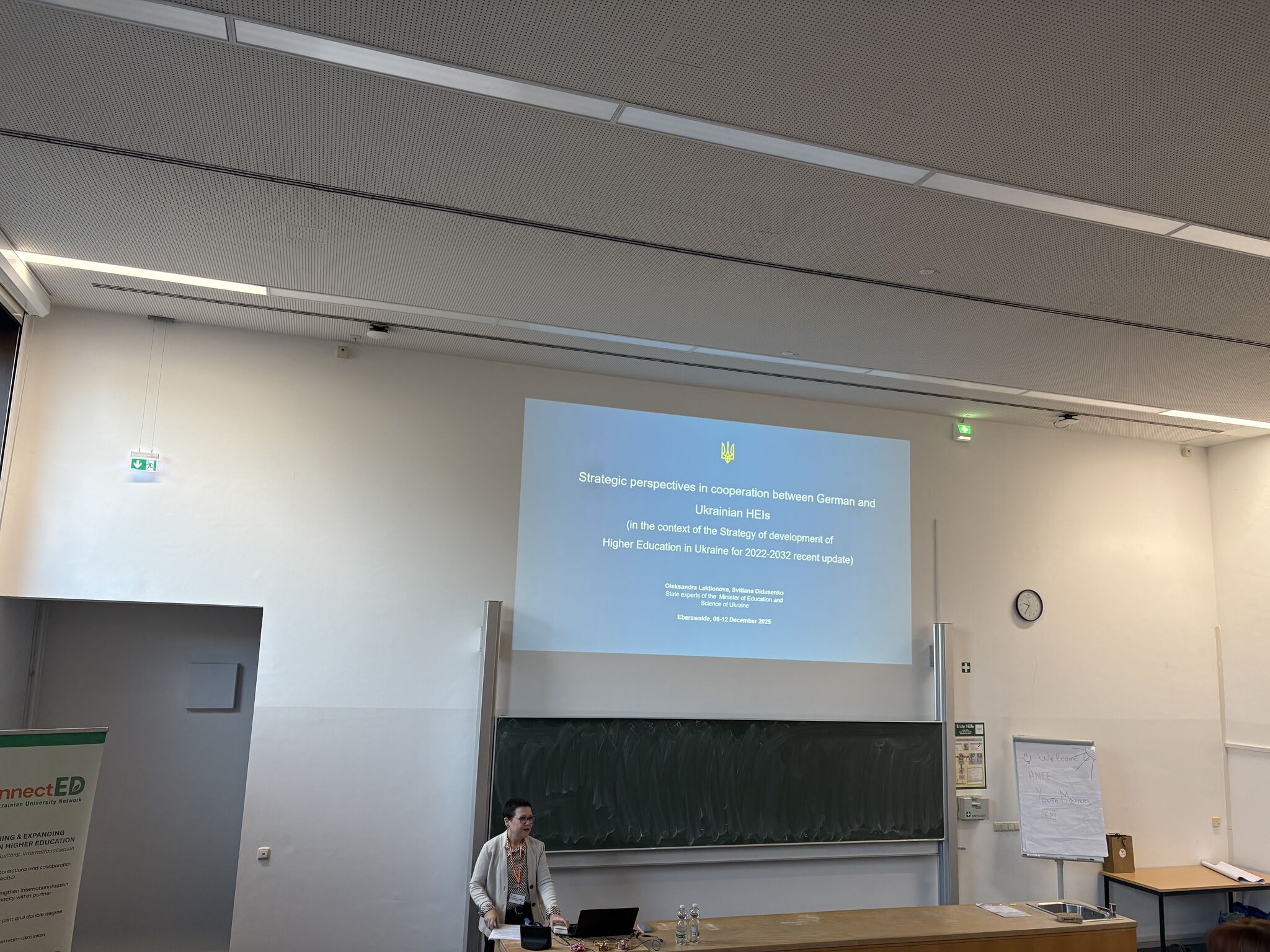
08-12.12.2025
In these challenging times of russia’s war against Ukraine, supporting Ukrainian universities, educators, and students is more important than ever. Ensuring that
teachers can continue their work and that students can pursue their studies is not only an act of solidarity, it is an investment in our shared academic future in the EU.
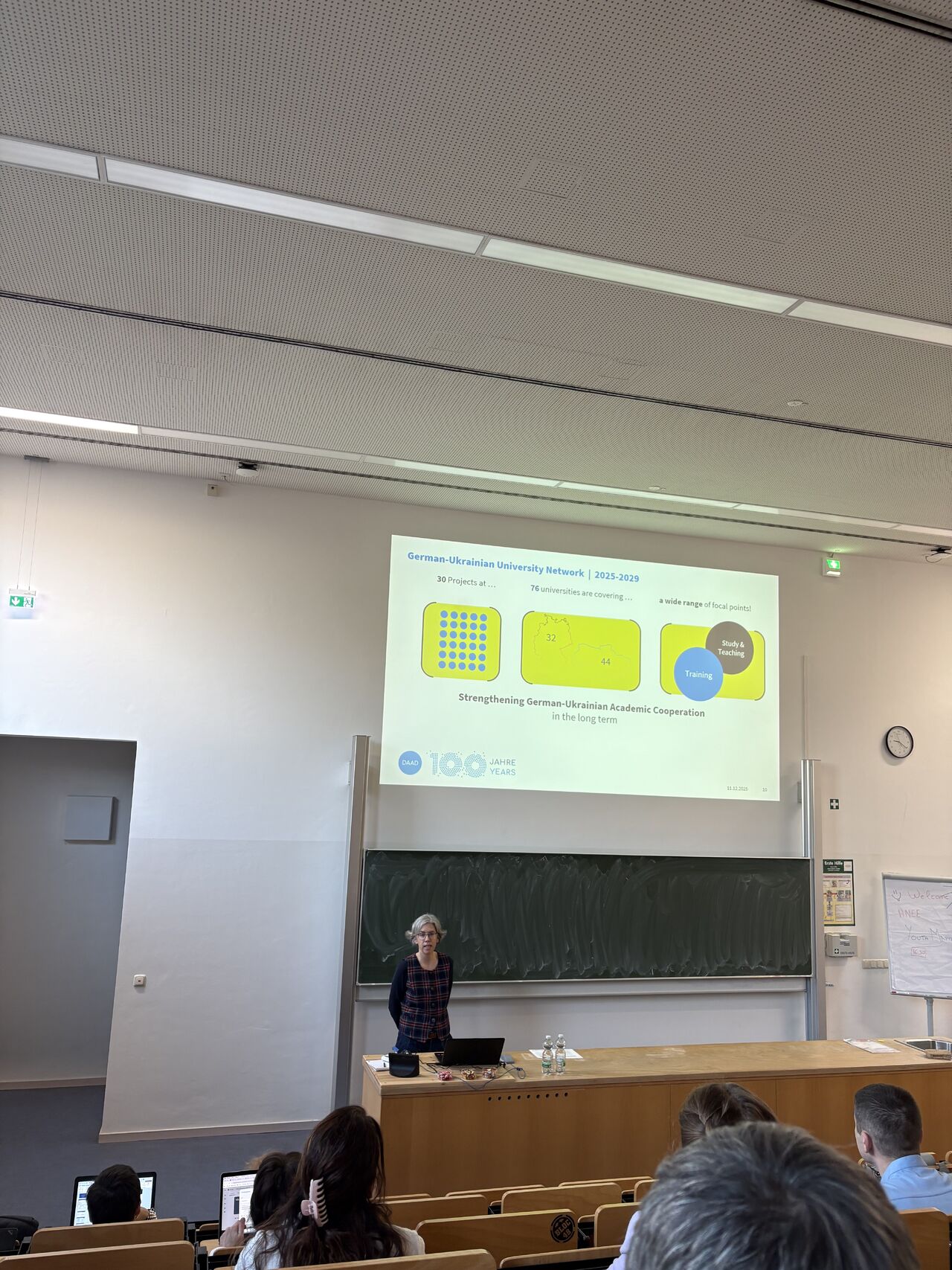
Within the Deutsch-Ukrainisches Hochschulnetzwerk (DUHN), we are working together on our pilot project CoSMoS-NT to build a resilient and collaborative educational
environment between Ukrainian and German universities. This partnership strengthens motivation, fosters innovation, and helps preserve the academic spirit despite the difficult
circumstances.
A heartfelt thank you to DAAD German Academic Exchange Service for their indispensable support, without which this cooperation would not be possible. Your commitment
truly makes a difference!
Special thanks to the ConnectED initiative for creating a unifying space between Ukrainian and German authorities who shape state policy in the field of higher
education, which promotes mutual understanding and the development of joint solutions to bridge the gap between the higher education systems in both countries.
Together, we continue to learn, teach, and build a brighter future! 🇺🇦🇩🇪
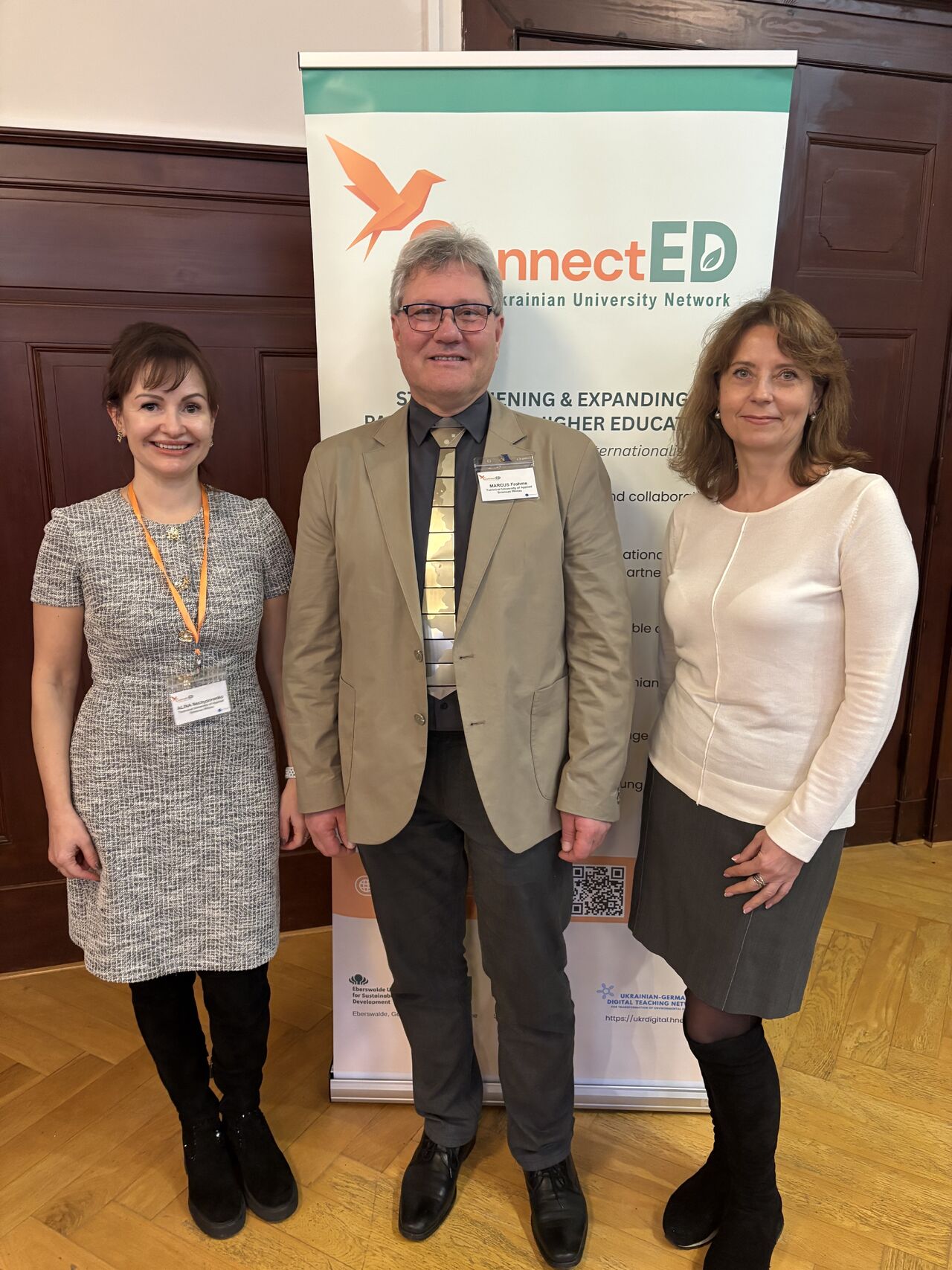


Participation in «Deutsch-Ukrainisches Hochschulnetzwerk». Day 1
03.12.2025
Our team was pleased to take part in the opening event of the DAAD German Academic Exchange Service “Deutsch-Ukrainisches Hochschulnetzwerk” programme in Berlin on 3–4
December 2025 and to present the new CoSMoS-NT project.
The first day was dedicated to the official opening and insightful speeches by distinguished guests. It was extremely valuable to hear contributions
from:
President of DAAD - Prof. Dr. Joybrato Mukherjee,
Founder and Chairman of the Harald Christ Stiftung für Demokratie und Vielfalt - Harald Christ,
Federal Minister for Research, Technology and Space – Dorothee Bär,
Ambassador of Ukraine to Germany - Oleksii Makeiev,
as well as a video message from the Deputy Minister of Education and Science of Ukraine - Prof. Dr. Mykola
Trofymenko.
We are sincerely grateful for the words of support, for the attention given to Ukrainian science and education, and for supporting the development of
German-Ukrainian academic cooperation. We greatly appreciate that the speakers highlighted the resilience of Ukrainian researchers under the conditions of the full-scale war.
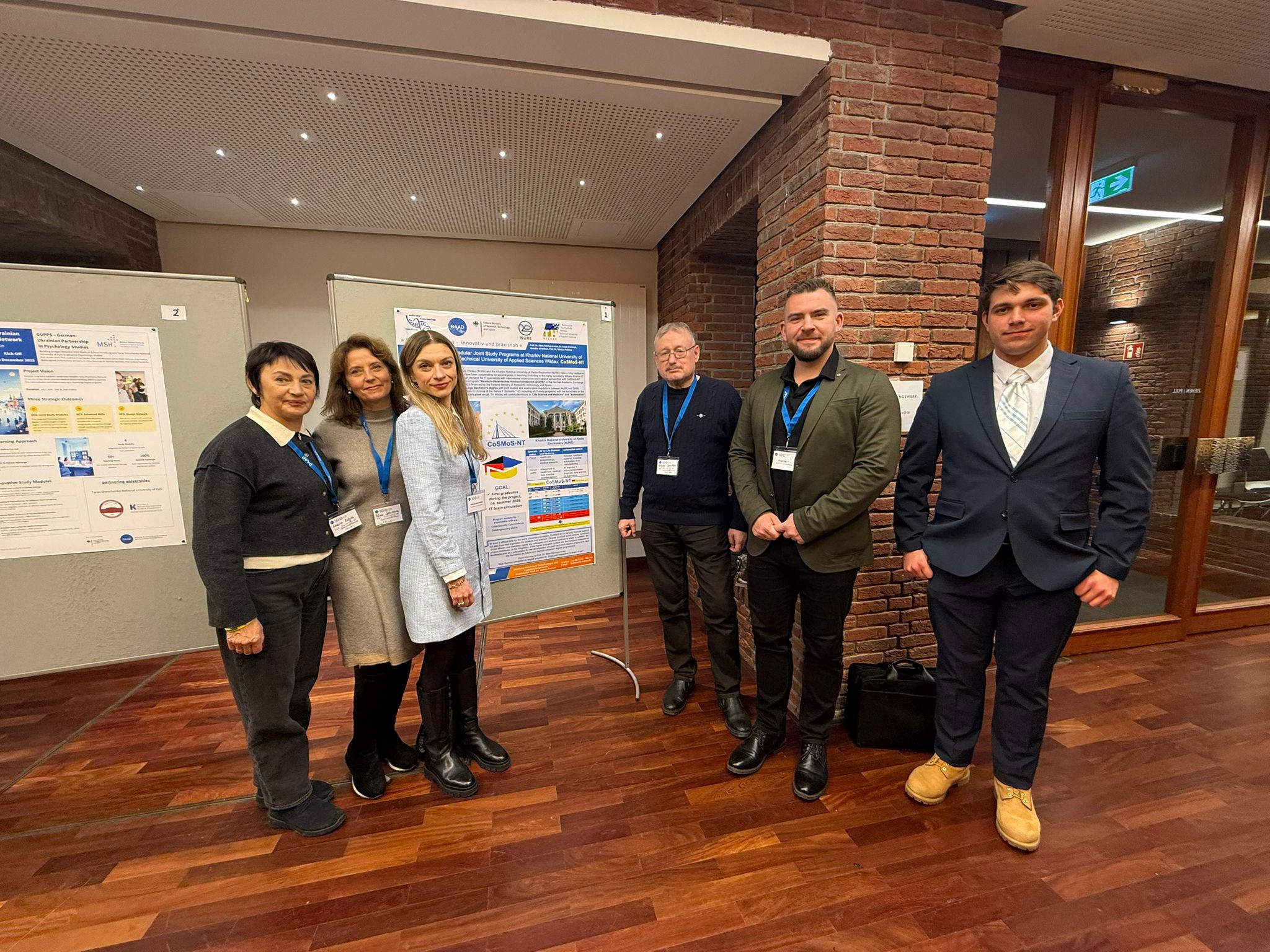
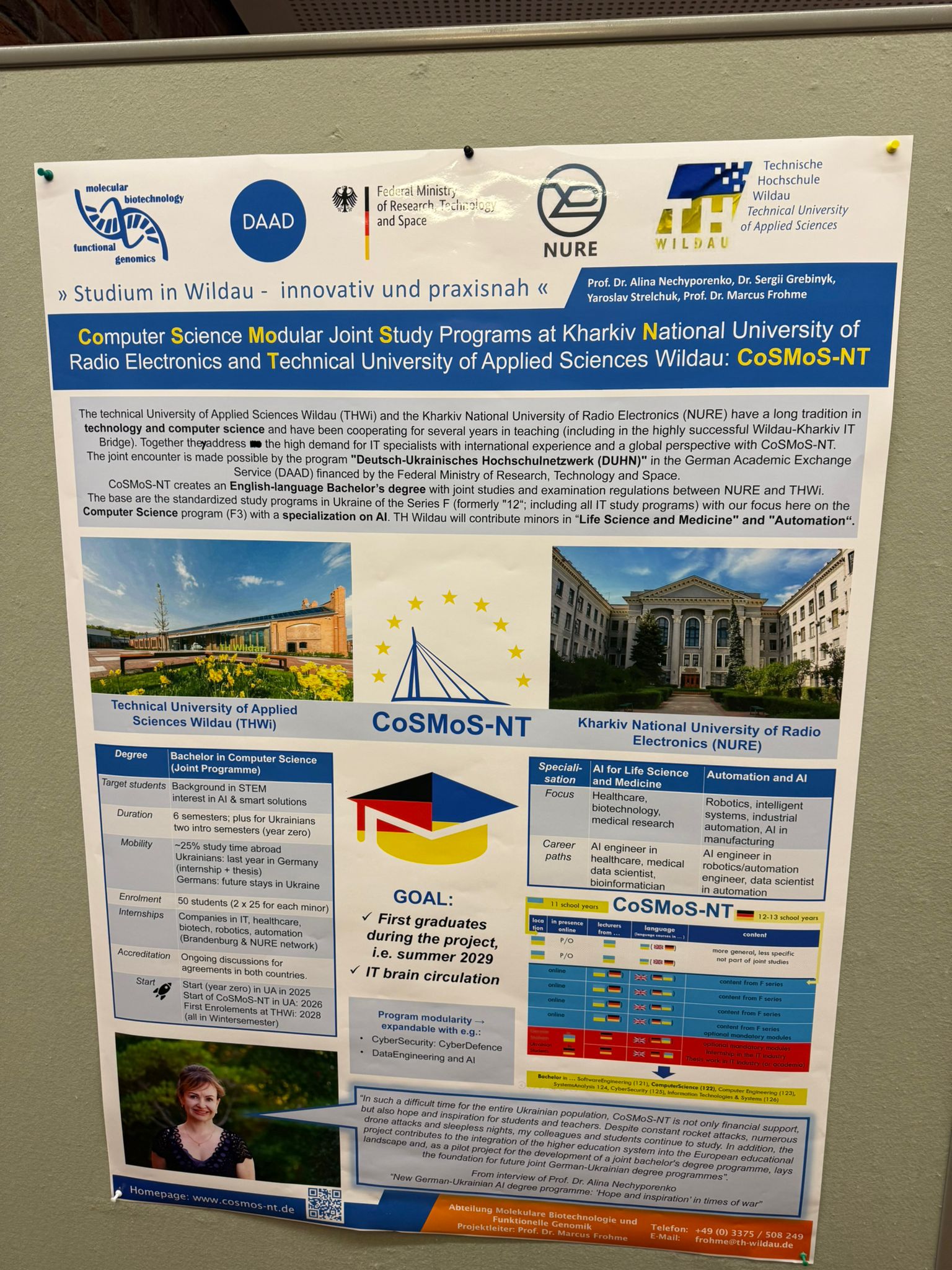
As part of the event, a poster session took place, during which we presented the poster of our CoSMoS-NT project, learned more about other initiatives in the
network and their approaches, and established valuable contacts with representatives of universities and organisations from both countries.
We would like to thank the organisers for a wonderful event, the networking opportunities, and the comfortable conditions throughout the day.


Participation in «Deutsch-Ukrainisches Hochschulnetzwerk». Day 2
04.12.2025
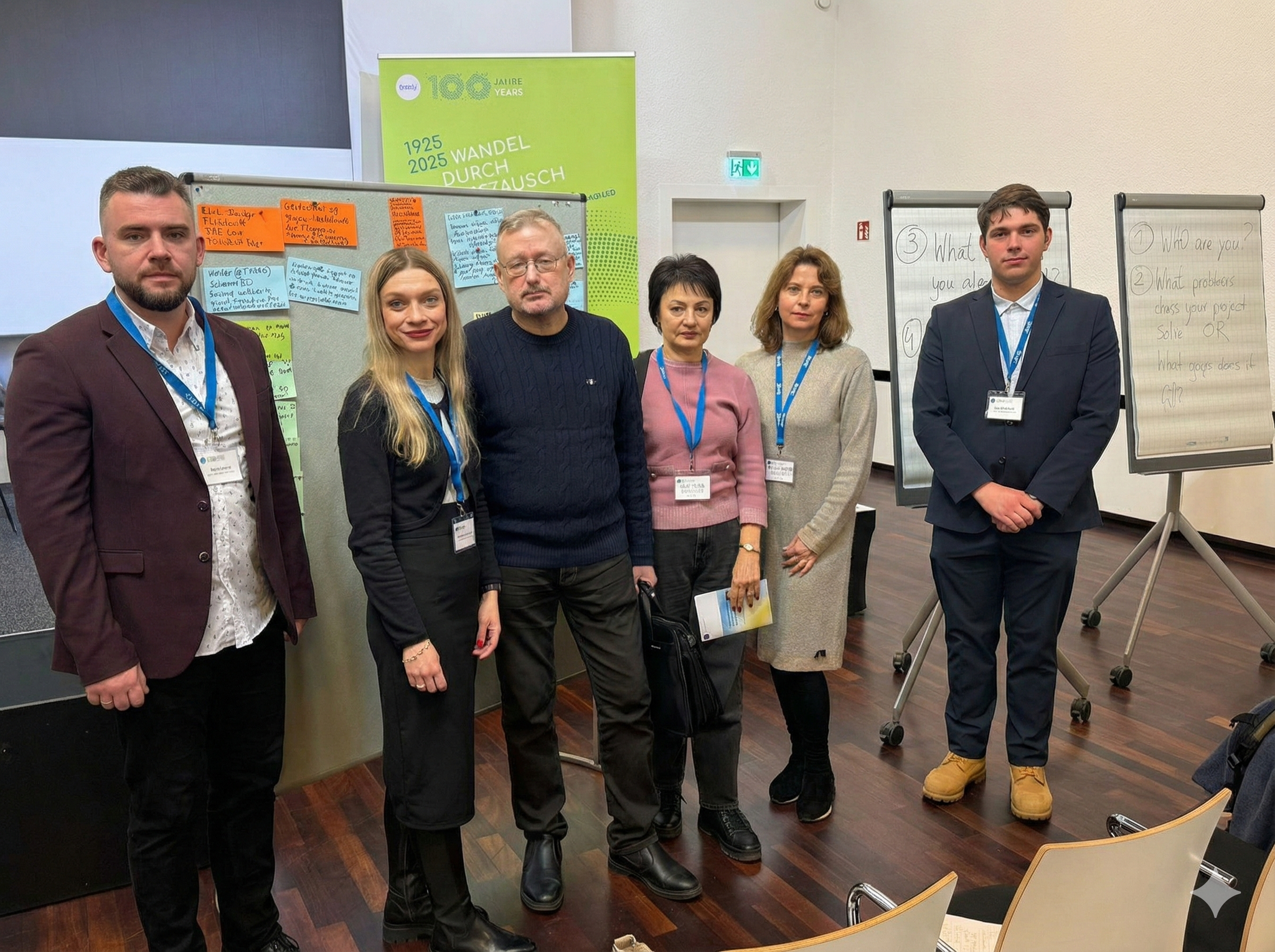
We were glad to attend the second day of the “Deutsch-Ukrainisches Hochschulnetzwerk” event in Berlin, which was dedicated to workshops and thematic
discussions.
We had another opportunity to present our CoSMoS-NT project, this time in a more interactive format:
- discussing ideas and approaches in a close exchange with representatives of other projects,
- receiving many insightful questions and comments,
- taking part in vivid discussions on challenges and possible ways to address them in German-Ukrainian academic cooperation.
During the workshops, we were able to gain a better understanding of the key challenges in academic collaboration. The discussions and answers that emerged were, at
times, truly eye-opening - they allowed us to look at certain challenges from a different angle and to see more clearly possible ways to address them.
This day also gave us the opportunity to get to know representatives of various programmes and universities even better, to exchange useful information and
contacts, and to outline the potential for future partnerships.
Once again, we would like to thank DAAD German Academic Exchange Service and all partners involved for organising an event that not only brings people together, but also
helps to look at shared tasks from a new perspective.


Dr. Maksym Yerokhin’s Visit to TH Wildau within the DAAD Eastern Partnerships Program
01-11.09.2025
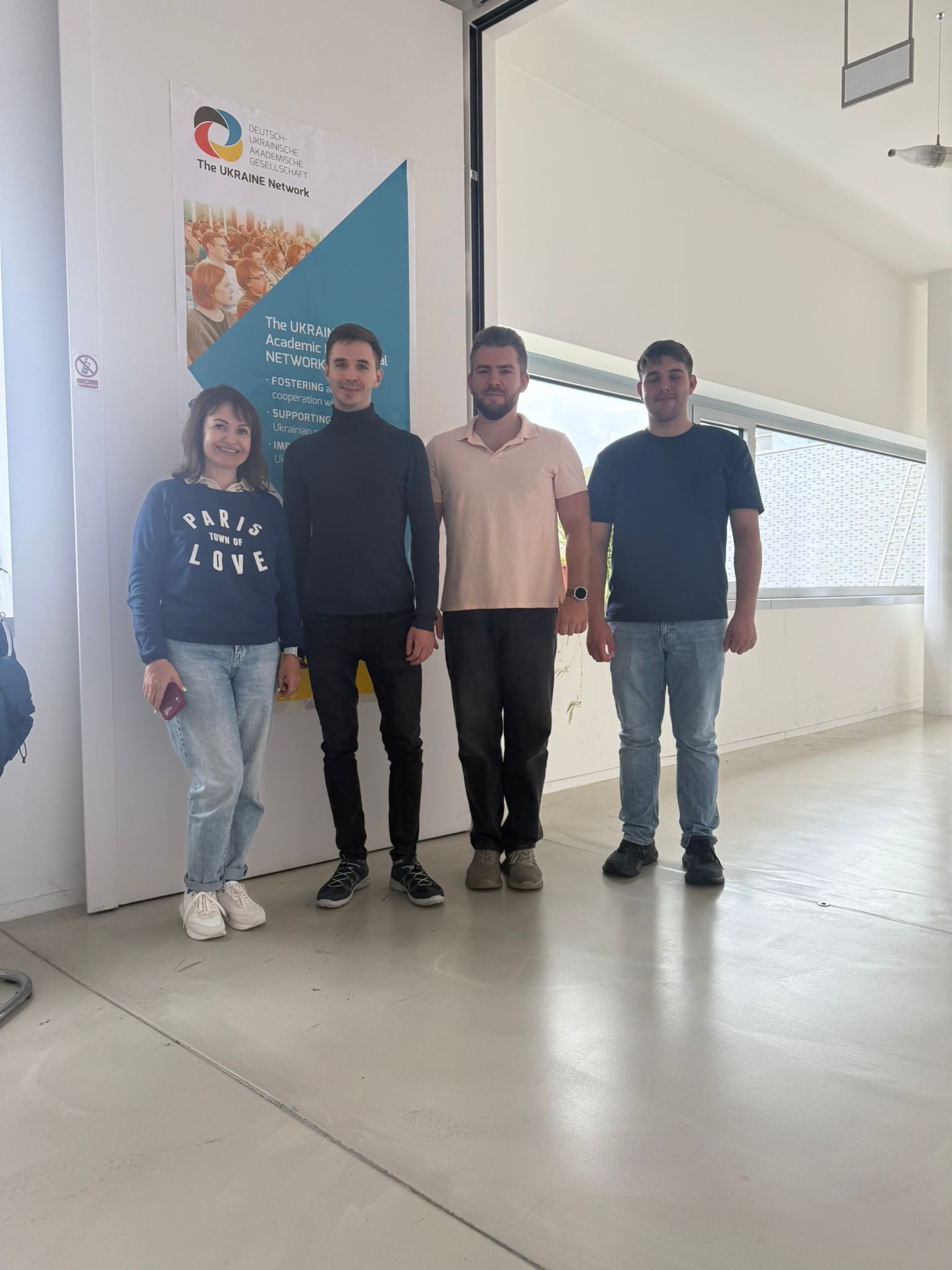
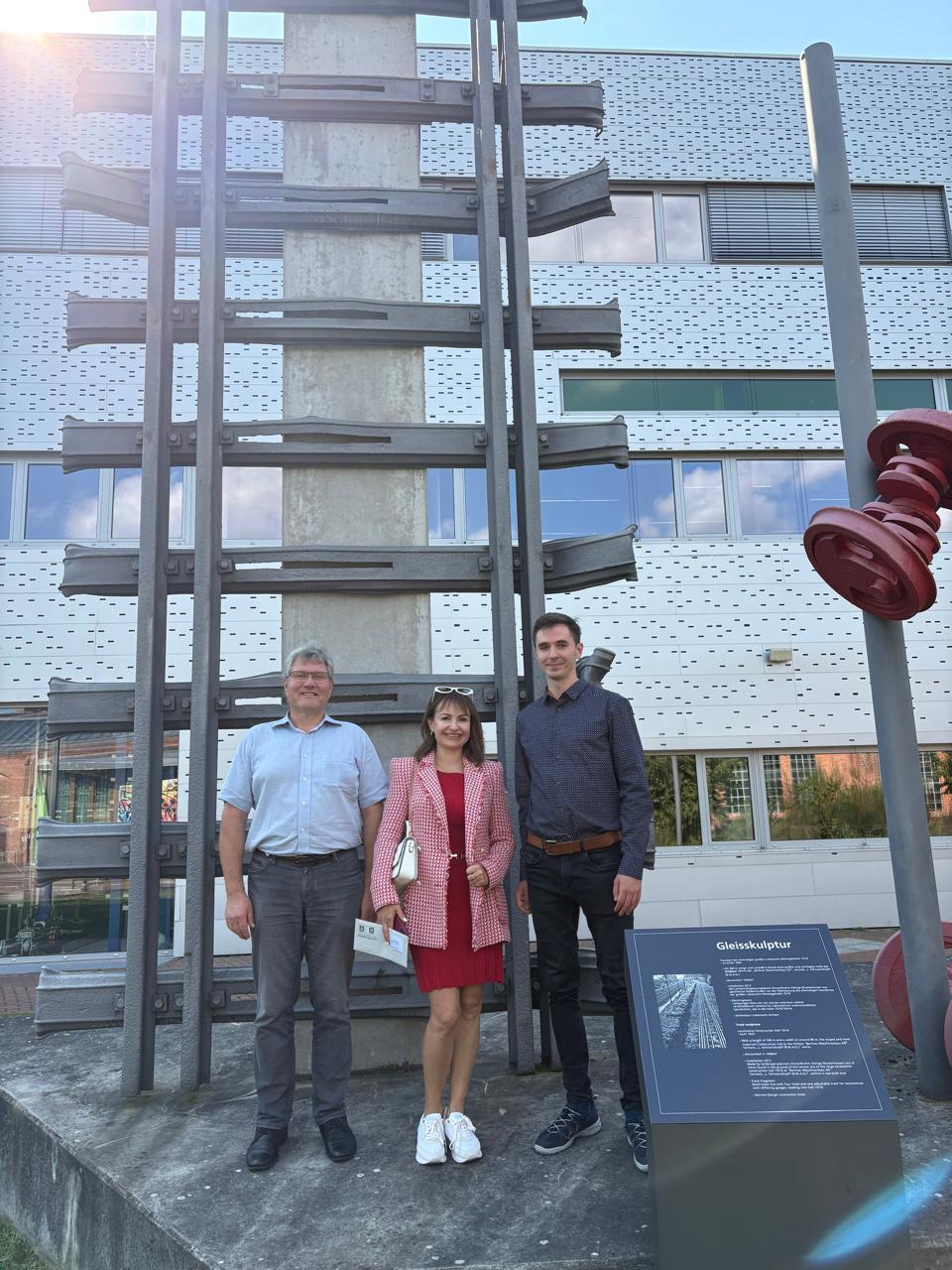
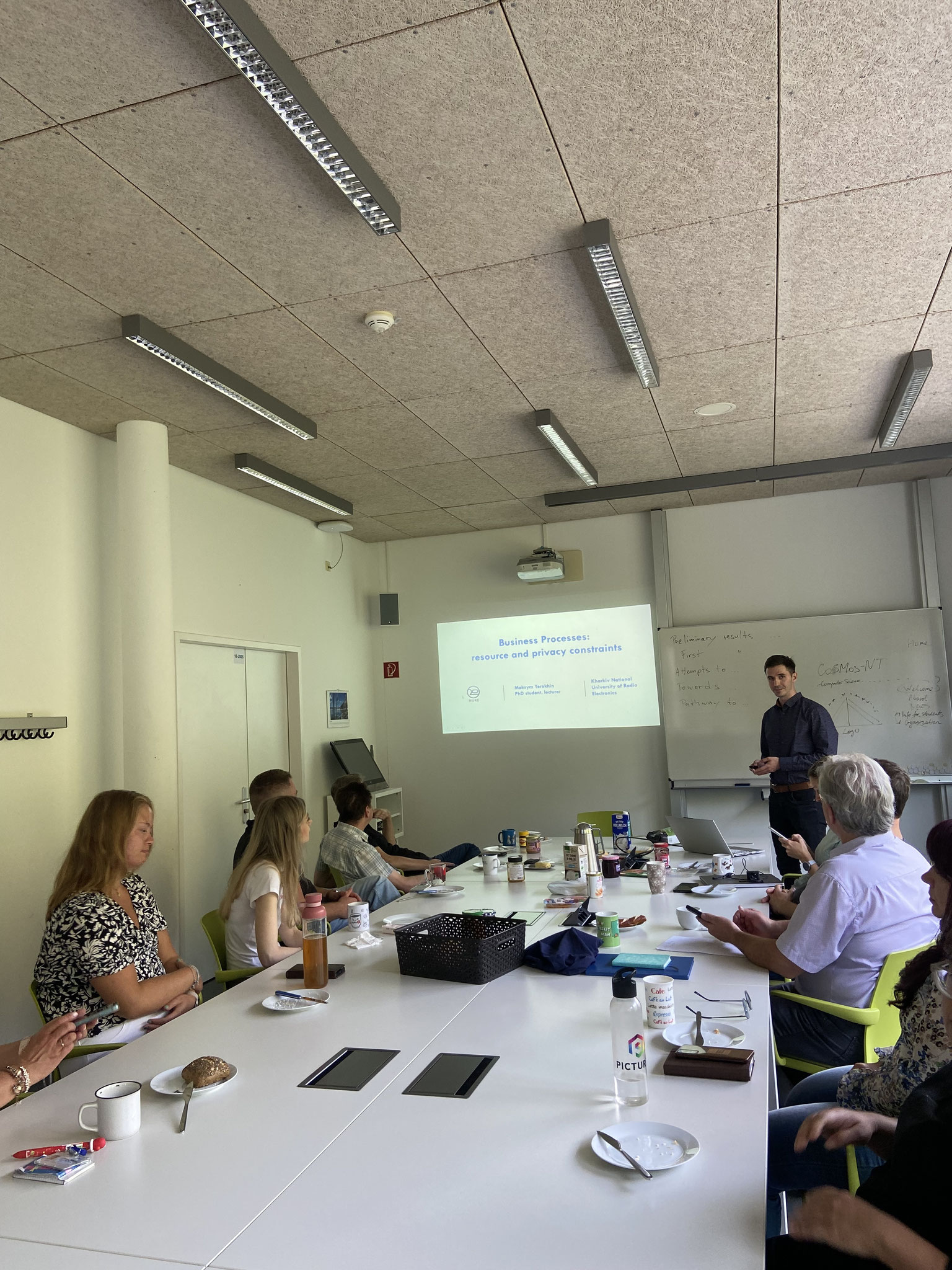
From 01.09 to 11.09, with a support of the "Eastern Partnerships" program funded by the German Academic Exchange Service (DAAD) ("DAAD Eastern Partnerships 2025-2027"), Dr. Maksym Yerokhin, Assist. Prof. of the Artificial Intelligence Department, was a guest at TH Wildau to work within the framework of Computer Science Modular Joint Study Programmes NURE-TH Wildau "CoSMoS-NT". During the visit, Dr. Yerokhin participated in the development of study and examination regulations regarding admission requirements and selection criteria for Ukrainian and German students.


New German-Ukrainian AI degree program: ‘Hope and inspiration’ in times of war
13.08.2025
New German-Ukrainian AI degree programme: ‘Hope and inspiration’ in times of war
The TH Wildau and Kharkiv National University of Radio Electronics will jointly offer a bachelor's degree in computer science with two AI specialisations. A future-oriented, European-focused degree programme is being created – while war rages in Ukraine. In an interview, project manager Alina Nechyporenko makes it clear: ‘The project is not only financial support, but also hope and inspiration for students and teachers.’
Ms Alina Nechyporenko, congratulations on the funding approval for CoSMoS-NT, a project to develop and implement a new German-Ukrainian degree programme. Please introduce yourself briefly and tell us what kind of degree programme this is.
CoSMoS-NT is a degree programme at the Kharkiv National University of Radio Elektroniks (NURE) in Ukraine and the TH Wildau with the title ‘Computer Science’. It comprises two specialisations: ‘AI for Life Science and Medicine’ and ‘Automation and AI’. I am the academic director and responsible for developing the Study and Examination Regulations, including the curriculum. I am also responsible for harmonising the admission criteria, accrediting the degree programme in Germany and assigning teaching duties. Later on, I will also be responsible for attracting partner companies in industry to cooperate with us.
Both degree programmes focus on artificial intelligence in their respective specialisations. Who are these degree programmes suitable for – what do you prepare students for?
Both specialisations of the Bachelor's degree programme in Computer Science are well suited for students with a background in STEM subjects who would like to work in the field of AI and smart solutions in the future. They offer excellent career opportunities and appeal to the diverse interests and skills of future graduates. For example, the specialisation ‘AI for Life Science and Medicine’ offers excellent employment opportunities in the application of AI and machine learning in healthcare, biotechnology and medical research, including interdisciplinarity that combines AI with biology, genomics, medical diagnostics, etc. Jobs could include AI researcher in healthcare, medical data scientist or bioinformatician. The specialisation in Automation and AI is suitable for students interested in robotics, intelligent systems, industrial automation and AI integration in manufacturing and production processes – here they could later work as robotics or automation engineers or, for example, data scientists in automation.
The degree programme is a so-called ‘joint programme’ – how does this differ from a ‘double degree programme’?
The main difference between a joint and a double degree programme is that a completely new study programme is created for both universities on a cooperative basis. The programme is coordinated, designed and structured by the partner universities, which means that the courses and content are closely aligned to create a consistent experience.
How will the degree programme be structured, and how many semesters will it take for German and Ukrainian students? How much time will students spend in the other country?
The programme has a modular structure, with core modules (25 per cent), subject modules (33 per cent) and specialisations (elective/compulsory modules, 25 per cent), an internship and a bachelor's thesis (17 per cent), based on the requirements of the F3 Computer Science programme, which is standardised in Ukraine. The degree programme comprises six semesters for German students and eight semesters for Ukrainian students. Depending on their study requirements, students spend about a quarter of their study time abroad. For example, Ukrainian students come to Germany in their final academic year for their industrial internship and bachelor's thesis.
How many students will be able to enrol in the degree programmes?
There are 25 places available per degree programme.
You hope that in the last two semesters, not only Ukrainian students will be able to come to Germany, but that there will also be mobility in the other direction – how could that work?
German students could improve their IT knowledge and skills at Ukrainian IT companies with which NURE cooperates and learn the Ukrainian language and traditions. However, this will only be possible once the war is over.
The degree programme has not yet been officially accredited – what steps have you already taken towards accreditation and when do you think it will officially start in Germany?
The first steps have already been taken. These include the submission and approval of the key issues paper on the development of the degree programme by the Faculty Board and the Executive Committee at TH Wildau. We are currently working with our Ukrainian colleagues to draft the Study and Examination Regulations, which will serve as the basis for accreditation. We plan to start the accreditation process in Germany at the end of September.
The first Ukrainian students will start the new degree programme in the winter semester 25/26. How will that work?
According to the project plan, the first Ukrainian students will begin their studies at NURE in the winter semester of 2025/26. Despite the war and the difficult situation in Kharkiv, the outlook for new students at NURE is very positive, as NURE is one of the leading institutions for training students in the IT sector in Ukraine.
The German school and university system differs from the Ukrainian system; for example, German students attend school for one or two years longer. What is the biggest challenge for you in developing the joint programme? Are there any obstacles?
In my opinion, the biggest challenge in developing a joint German-Ukrainian degree programme in this context is harmonising the admission criteria for the universities. Ukrainian students also need considerable support in finding internships, as students in Ukraine are usually sent by their faculty to do industrial internships and write their final theses.
During their year of attendance, students are required to complete an internship. What companies are you looking for and how do you support students in finding placements?
One of our tasks is to find internships for students. The search focuses primarily on companies in Brandenburg, including companies in the IT, healthcare, biotechnology, robotics and automation sectors.
Can you describe what it is like for you to be involved in this forward-looking project during the war in Ukraine? How do you find support – perhaps beyond the funding – and what is important?
In such a difficult time for the entire Ukrainian population, CoSMoS-NT is not only financial support, but also hope and inspiration for students and teachers. Despite constant rocket attacks, numerous drone attacks and sleepless nights, my colleagues and students continue to study. In addition, the project contributes to the integration of the higher education system into the European educational landscape and, as a pilot project for the development of a joint bachelor's degree programme, lays the foundation for future joint German-Ukrainian degree programmes.